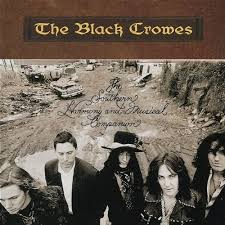
Favorite 90s Albums: #4 The Black Crowes, “Southern Harmony and Musical Companion”

download (1)

No sophomore slump here – The Black Crowes drop original guitarist Jeff Cease and pick up a monster player in replacement Marc Ford, who becomes quite the counterpoint to rhythm guitarist Rich Robinson and the “secret sauce” that helps push this album to #1 on the Billboard charts in 1992.  While debut Shake Your Moneymaker was an excellent disc, Southern Harmony adds a bit more muscular stomp ‘n swagger courtesy of the addition of Ford but also thanks to some excellent keyboard work from newcomer Eddie Harsch and female backing vocals on a good majority of the cuts.  These additions add more of a sonic density, fattening the songs with a certain thickness and, amazingly enough, increasing the warm soul power of lead singer Chris Robinson.

While some naysayers called the band Faces/Stones ripoffs on their debut, the Crowes really made their mark on this album and forged their own sound.  The one/two punch of “Sting Me” and “Remedy” is a monster; the former riding a nasty, chunky groove and features a strong Chris Robinson vocal with the latter cut a bit more smoother funkiness and laid back a hair in comparison.  Both tunes clearly set the tone for the album, showing off the excellent Robinson/Ford tag team as they lay down bedrock riffs and outstanding guitar fills.  Next cut “Thorn In My Pride” is incredible; Eddie Harsch’s intro keyboard is dripping with soul and the groove is mighty laid back and in the pocket and features another great Robinson vocal.  Not to be outdone, Robinson and the backing singers absolutely rule on the next two slow burners “Bad Luck Blue Eyes Goodbye” and “Sometimes Salvation”- both cuts a bit of a lazy Sunday vibe, certainly not in any rush but incredibly strong on feel.

But man…  to me, the back half of this album is where the gems are.  “Hotel Illness” has a similar swagger as to the hits on the debut, but the three headed monster of “Black Moon Creeping”, “No Speak No Slave”, and “My Morning Song” are dead on perfect-  the band as a whole sounds loose, live, and wide open as if producer George Drakoulias flipped the record switch during a jam session.  “Black Moon Creeping” lives up to its title as it rides a nasty, creep of guitar chunk and talkbox, elevating the stomp during the chorus as Robinson and the female vocalists wonder “whatcha got buried in your backyard?”; “No Speak No Slave” shows off how well the Robinson/Ford interplay works-  the former with a solid rhythm, which the latter counters and eventually slays with a tasty solo; and “My Morning Song” includes silvery slide work between the two guitarists and balanced well by the fantastic keyboard work of Harsch, but that fab chorus is an earworm:

“March me down to the seven seas
Bury me with a ruby ring
Kiss me baby on an Easter Sunday day
Make my haze blow away”

(Not sure what it means, but hey…  it’s a doozy listening to it 🙂

The album eases out with a Bob Marley cover in “Time Will Tell”, sounding like a late night take well into the early hours of the morning featuring just the core band without the female vocals.  A bit contrary to the raucousness on display via the other cuts, yet a performance equally strong in passion and an excellent way to close out the album.

While the band went on to release a handful of other fantastic discs in the ’90s, none of them would rock as hard or reach the sonic heights of Southern Harmony.  After two more albums, bassist Johnny Colt and guitarist Marc Ford were out of the group and the band went through a series of replacements over the next two decades before eventually breaking up for good in 2015, leaving singer Chris Robinson to form his own band (the Brotherhood) and guitarist brother Rich rejoining with Marc Ford and late period bassist to form the excellent Magpie Salute.  For those that need their Crowes fix you now have  double the pleasure 🙂


Favorite 90s Albums: #5 Peter Gabriel, “US”

download

Peter Gabriel is an example of an artist that I fully respected for his 80s catalog yet never used my hard earned spending cabbage to actually purchase one of his albums.  His videos were often quirky yet oddly arresting and the songs catchy but there were other artists that had captured my attention moreso during that period.  It wasn’t until the 90s that I eventually picked up his Shaking The Tree collection, which piqued my interest in the non-hits and prompted me to investigate his other material and eventually led me to his (at the time) fairly recently released US album.

US is a warm, musically rich release featuring a broad batch of material stretching from bouncy pop/R&B, world music, gospel, progressive/atmospheric, trip hop, and rock across its ten songs.  Written during a period after a failed marriage and rocky relationships, Gabriel walks the line between generating feel good tunes similar to what was on his commercial breakthrough So (“Kiss That Frog”, “Steam”) and more emotionally raw material of various strains (“Come Talk To Me”, “Love To Be Loved”, “Secret World”) that offers up more of an insight into Gabriel’s personal psyche than past material.  In some ways the focus is a little uneven and scattered possibly due to record company interference in wanting another “Sledgehammer”, yet with another excellent production job from Daniel Lanois and Gabriel’s naked emotions on display mixed with a raft of other adventurous material makes US #5 on my favorite albums of the 90s.

The years between So and US found Gabriel delving deep into world music, coming to fruition in the album Passion: Music for The Last Temptation of Christ and eventually spilling over into some cuts on US.  Intro track “Come Talk To Me” kicks off with a beautiful introductory blast of bagpipes and features Sengalese sabar drumming, Asian/Middle Eastern woodwinds, and a magical mix of Gabriel lead vocal and backups from Sinead O’Connor and Dmitri Pokrovsky Ensemble.  Other experimentations show up in second track “Love To Be Loved”, propelled by Indian percussion and deep bass grooves from Tony Levin; the slinky, sexy propulsion of “Digging In The Dirt”‘s darker instrumentation and vocal light and shade; and adventurous keyboard interplay with duduk and African percussion in the mesmerizing “Fourteen Black Paintings”.  Gabriel’s ability to weave various instrumentation into the mix along with his unique vocal stylings makes his music such a rewarding listen, and on US he hits on another winning album.

Last comment on this album revolves more around the aforementioned “vocal stylings”:  on US Gabriel’s vocals are a bit more understated and vulnerable which offers up more of a soulful vibe in comparison with his earlier solo material and almost diametrically opposed to the energetic display on his Genesis records.  Cuts like the aforementioned “Come Talk To Me” and “Blood Of Eden” show a man in tune with a different musical ambiance than previous records, almost a bit world weary and defeated but still with enough hope that things will be better.  The raw emotion and honesty in “Washing Of The Water” is a perfect example- starting off with subtle percussive and string arrangements, Gabriel sinks deep into the song, singing mostly in an almost melancholy lower register during the intro and eventually into a beautifully moving higher section before reaching a crescendo with a bit of naked power during the “Letting go…” verse near the conclusion of the song.  Lyrically, this song is as real as it gets-  the pain that can occur in a broken relationship; not just personal pain but the pain that the person may have caused to a loved one.  A swirling, beautiful mass of emotions sung with much depth.

While US as a whole may be slightly uneven the positives absolutely outweigh any negatives that may be foreseen.  Peel away the bouncier cuts and delve deep into the lavish instrumentation and heartfelt sentiments of the lyrics and vocals in this deeply personal album and you will be rewarded greatly.  A highly underrated Peter Gabriel release.

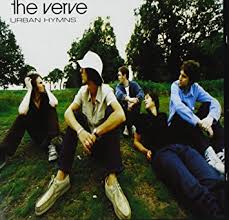
Favorite 90s Albums: #6 The Verve, “Urban Hymns”


download (1)

Out of the entire Favorite 90s Albums list, Urban Hymns is the one that sticks out like a sore thumb-  not in comparison to the rest of the albums on the list, but for two reasons in particular…  number one, I probably listened to this album the least in the 1990s- thought “Bittersweet Symphony” was (and still is) a classic and never gave the rest of the album much of a chance.  And number two…  I may have listened more to this album over the last few years than I have any other album from the 90s.  Why is that?  Hard to say, but this disc has really grabbed me more over the past few years and my Verve fandom has increased tenfold since I originally purchased this disc in the late 90s.

OK, I’ll fess up…  I’m a rock dude first-  the heavier the guitars, the better I’m gonna dig it.  Throw in a lungbusting, charismatic vocalist and a solid thumping beat and I’m sold.  But…  I love hooks too, especially with a great riff and a killer chorus that sticks in the brain like an earworm.  So when I heard “Bittersweet Symphony” I was immediately knocked out-  there’s really no rock on the song at all but THAT HOOK…  there was just something psychedelically groovy in the soaring, uplifting vibe in the vocal and the orchestration that grabbed me.  This was quite a bit different from what I normally listened to although my tastes had grown quite a bit over the years (working in a record store will do that to you).  I bought the disc, played “Bittersweet Symphony” a gazillion times, then went on to the next song…  ummm…  kinda slow…  next song…  hmmm…  tempo picks up but this song kinda drags along…  next one…  oh jeez, another slow one.  It’s kind of pretty, but… next…  ah screw it, let’s play “Bittersweet Symphony” again!

And so it went for a few more years until one day I decided to revisit the disc again-  don’t remember exactly why; it could have been the iPod on shuffle mode and I heard something that I didn’t recall but was pretty intriguing, or it could have been that I started revisiting music from the 90s again (or maybe it was another viewing of 24 Hour Party People, a fab movie about the “Madchester” music scene in the early 90s).  At any rate, I pulled out Urban Hymns once again and this time something different hit me-  there are vast sonic soundscapes on this disc that I’d never really picked up on before.  This time I pretty much went into the disc with zero expectations and came out after a full listen a big fan of what I was hearing:  granted, there are some beautiful melodies here in the softer songs like the yearning “Sonnet”,  the sad and wistful “The Drugs Don’t Work”, and the melancholy “Velvet Morning”; all three songs filled with lush orchestration reminiscent of some late 60s/early 70s mellow singer songwriter led pop music from Great Britain.  But there was one slight difference that I’d not really noticed before-  the incredible work of guitarist Nick McCabe.

As I’ve gotten older my tastes have grown in various extremes and one of those ways is more atmospheric music of various shades and hues across the sonic spectrum and not just the headbanging, loud riffing of some older favorites.  An example of this is Nick McCabe’s brilliant work on Urban Hymns; everything from beautifully strummed acoustic passages, various washes of feedback, volume swells, tasty reverb and wah wah, and the occasional moment of heavy distortion.  While Richard Ashcroft’s melodies are often the key focal point of each song McCabe’s work is layered deep in the mix, offering up an outstanding, darker counterpoint to the often light and sweeter vocal.  Take “Weeping Willow”, a fairly easy going and casual Ashcroft vocal awash with various layers of McCabe guitar goodness- phased rhythm washes, heavy strums, beautiful guitar runs, and shimmering beauty.  Or take the menacingly understated psychedelia of “The Rolling People”, which rides a soupy riff awash in a maelstrom of feedback and dense guitar reverberations, or the stomping nod to the early days with “Come On”‘s heavy riffs and wall of noise.  And if that’s too much noise for you check out his counterplay to the acoustic rhythm and orchestrations in the gorgeous “Lucky Man”- no feedback overkill here, just some sweet electric guitar runs and tasty feels that fully supports this beautiful song.

If you’ve ever put an album on a shelf and not revisited it in a while, it may be worth it to give it a relisten as you may hear things differently than you did before.  And if you ever picked up the original Urban Hymns, I highly suggest that you pick up the super deluxe six disc box set that was released last year which includes the original album, b sides, live cuts, demos, and a DVD.  It is well worth it.  You may hear it in a way that you’d never quite heard it before.