


So, we longtime fans all agree there ain’t nothin’ better than Iron Maiden in the 80s right? Well, maybe some of you newer fans out there prefer the Maiden output from this century but is there any of you lot out there that prefers “the lost decade”? The 90s were certainly an odd period for the band as multiple changes were afoot, not only with grunge and nu metal dominating the era but within the band itself- out was guitarist Adrian Smith and in was Janick Gers, but most shocking of all and one that sent Maiden fans into a tizzy was the departure of Bruce Dickinson and the recruitment of his replacement Blaze Bayley. Overall, the band put out four studio albums during that period but out of those which one was the best? Only one man’s opinion… but read on!

Let’s start with the decade topper No Prayer For The Dying– at some point early in 1990 the band decide to “get back to the basics” and make a stripped down, rawer album devoid of the more progressive elements found on the previous two platters (Somewhere In Time and Seventh Son Of A Seventh Son). As work commenced on the album guitarist Adrian Smith decided to take a leap of faith and leave the band, unhappy with the return to roots and eager to go off on his own to explore new things. Enter Janick Gers for the recording of the album, which found the band still rocking hard but not making any progression from their previous albums- it was more like a regression, although not an exceptionally bad one. In all honesty, the album was a bit looser in some ways (see lead single “Holy Smoke” and “Bring Your Daughter To The Slaughter” for raw fun) with more of a live, off the cuff feel but overall it felt a bit different from their great run in the 80s. Part of this could be chalked up to the switch from the smoother stylings of Smith to the more wild and off the cuff Gers, but also Dickinson’s vocal range appeared to suffer as he was a bit more snarly and growly in comparison to the Air Raid Siren of old. Songs like “Tailgunner”, “Run Silent Run Deep”, and “Fates Warning” were some of the highlights of the album but nothing felt like an Iron Maiden “classic”, and maybe the band agrees as very few (if any?) of these songs have reappeared since the tour for the album (other than maybe “Bring Your Daughter”). As a Maiden diehard, I do pull this out on occasion and do enjoy the tunes because hey… it’s Iron Maiden!

Two short years later the band returned with Fear Of The Dark, an album which included the classic (yes, there IS one on this album!) title track along with a wildly uneven yet interesting batch of good to great tracks and also includes what has to be my all time least favorite Iron Maiden song in “Weekend Warrior” (let’s not get into it). Interestingly, new boy Gers finally has some writing credits with the band, penning the ripping “Be Quick Or Be Dead” and semi-ballad “Wasting Love” with Dickinson; both tunes adding a fresh coat of paint but falling short of “greatest hits” status (the other two Gers/Dickinson tunes fall into the “just OK” category). Bassist and sergeant at arms Steve Harris gives us the highly underrated “Childhood’s End”, swashbuckling fun in “From Here To Eternity”, and the semi-progressive “Afraid To Shoot Strangers”, yet his Gers cowrites are the weaker points of the album. Still, the man can pen a gem and gives us the great title track but short of that, Fear ranks lower than No Prayer For The Dying for two specific reasons: 1) overall inconsistency in songwriting; and 2) the godawful snare sound from Nicko McBrain. Just what in the hell is up with that? It is mixed waaaay too high and has some sort of odd delayed echo that overpowers most of the songs and leaves a slappy, flat, and wet sound. That lack of crack at the intro of “Be Quick Or Be Dead” has always turned me off, which is a shame because the album isn’t bad and some of the songs came off great live, but… oh well. The band took a few chances on this one but the end result is still the weakest album of the Dickinson years.
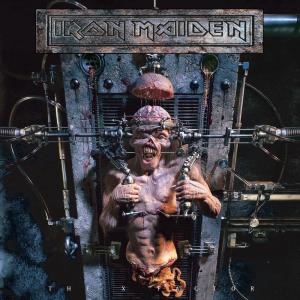
Next up comes the album that is one of the most divisive in the Maiden canon, one that has its fair share of haters but also one that uniquely stands on its own and has no comparison within the catalog. Biggest change of all of course is new boy Blaze Bayley, an interesting yet somewhat inspired choice as a vocalist as he’s a bit deeper and huskier from a tonal perspective compared to Bruce with the only commonality is that they… errr… are both British (which seemed to be a necessity for the job); Bayley having led the biker rock cum Van Halen vibes of Wolfsbane for a few albums before being plucked from that band’s relative obscurity to front the mighty Maiden. His debut with the band was the darkest, driest, and probably the most shocking release (get a load of Eddie!) in the band’s career in The X Factor, an album far removed from the previous two that retained some sonic stylings of the Maiden sound but lyrically focused more on the darker elements of the human psyche. On first listen this was likely a bit jarring for long time fans, but once you wrap your mind around the fact that this ain’t Bruce Dickinson and accept Blaze for what he is then you will realize… hey, this isn’t that bad of an album! Matter of fact, it’s pretty good! Well, I didn’t quite think that for a few months but after repeated listens at 5 AM in the morning on the long, dark drive to work with the occasional full moon in the sky I came to appreciate it. Songs like “Sign Of The Cross”, “Blood On The World’s Hands”, and “The Edge Of Darkness” had bits of the Maiden gallop of old in spots but with much darker hues and textures rarely displayed on previous albums, and even moodier cuts like “Lord Of The Flies” and those somber in tone like “Fortunes Of War” and “2 AM” were oddly captivating in their own way. The tenor of the songs as well as the understated production and over the top album artwork showed a different side of the band, one that was a bit removed from their heyday yet still retained enough uniqueness to keep things interesting.
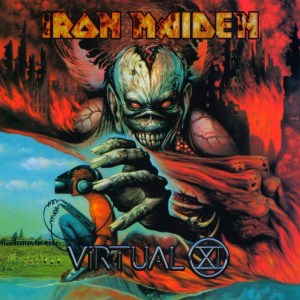
Last album of the 90s and last to feature Blaze is Virtual XI, which is another odd mix of songs that are either excellent (“The Clansman”) or very good (“Futureal”) to good (“The Educated Fool”, “Don’t Look To The Eyes of a Stranger) and just OK (the rest of the album). What’s interesting here is how Steve Harris can pen a nine minute classic in “The Clansman”, a song that has various unique parts that tie extremely well together, yet writes another nine minute song that has decent ideas yet is way too repetitive in “The Angel And The Gambler”, a song that would have been a decent rocker if they’d just cut that dang chorus down by a few minutes. Those aforementioned “good” songs sound like brightly polished X Factor leftovers, fitting in quite well with Blaze’s darker and smoky midrange, but man… quite a few of the remainders sound like the band was pining for their previous vocalist as many vocal lines and melodies feel too far out of Bayley’s comfort zone and leaving him straining to hit the notes and sounding flat on others. Songs like “When Two Worlds Collide” and “Lightning Strikes Twice” sound perfectly tuned for a Bruce Bruce vocal but in Blaze’s hands they just sound downright off and not written to his strengths. He’s got some of that punch in the midrange and sounds strong but there are too many notes in the Air Raid Siren’s register that he had not quite mastered and are poorly executed, which may have been one of the reasons he was let go not long after the tour for the album.
So dear readers, what album is Maiden’s best from the 90s? No, you can’t pick one of Bruce or Adrian’s solo albums nor may you choose a live album! As for my favorite?
(drum roll)
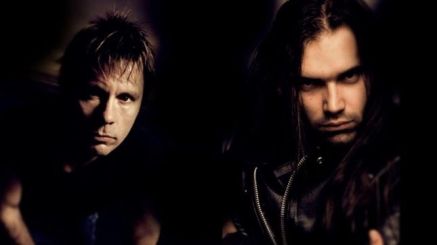
THE X FACTOR
Yes, you read that right- The X Factor. Some of you may be saying… just how in THE HELL can you choose THAT album? For one… when listening, get Bruce out of your head. This IS NOT A BRUCE DICKINSON ALBUM. THIS is a Blaze Bayley album and suits his vocals to a T (short of the weak cut “Judgment Of Heaven”)- it’s dark, it’s moody, and needed a vocalist with a richer and more midrangey tone than what Dickinson could offer. Secondly… this is a bit of a headphones album, one that is best felt all alone in a darkened room or space with no interruption. Those early AM drives to work on moonlit nights traveled on dark roads with little traffic were key in my appreciation of this album. The ebb and flow of the music along with the somber lyrical tone just hit me hard once I appreciate the album for what it was. While I’m immensely happy that Bruce and Adrian Smith returned to the band in 2000 and feel that their most recent output is the best since their 80s classics, I still think The X Factor is a very good album that stands as the best from their 90s output.
 ironriot.blog