
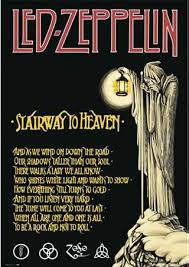
Those of us that grew up with the good ol’ days of radio and are aware of the current (and fairly limited, in my opinion) classic rock station playlists can probably rattle off a number of artists that are/were in constant rotation on the dial. There would always be a good dose of Stones, Beatles, Hendrix, AC/DC, Eagles, maybe a bit of Van Halen, etc, that you’d come to expect at any time during the day (sometimes multiple times during the same hour) due to the popularity of said artists. But out of all artists and songs that continue to play on rock radio, Led Zeppelin’s “Stairway To Heaven” still ranks high on the list as one of THE most played songs ever. But is that a good thing?
We all have bands, songs, or artists out there that we are tired of hearing due to incessant use in movie soundtracks and commercials. At one time you may have had a favorite song that when it came on the radio you’d crank the volume just to bop your head and sing along but now you just skip over it as you scan through the dial to find something fresh or new. Maybe what was the coolest thing ever at one time is now deemed “old hat” or a guilty pleasure and you’ve moved on to other types of music. No problem with that, but there has to be songs out there that still get a reaction… right? RIGHT?
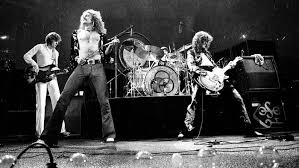
So let me get to the point. I was reading a music board online where somebody made a comment about how sick and tired they were of hearing “Stairway To Heaven” and it made me think- ok, I get it… the song has been a rock radio staple since its inception and is likely playing on multiple stations right now, but there is NO WAY that I could be sick of “Stairway”. The song has always held some sort of mystical hold over me unlike your typical verse/chorus/verse hits of the day, where the hook stays in your brain like an earworm and won’t let go. But are those typical hooks in “Stairway”? I don’t think so. Granted, I may skip over it depending on the mood but there’s always that hesitant pause whether it pops up on the iPod or if I catch part of it on the radio. It still retains that “wow factor”.
What is it that makes “Stairway To Heaven” so transcendent and truly mesmerizing? Let’s break it down:
Intro (00:00-00:52)
Stairway’s spellbinding intro is truly a thing of beauty- Jimmy Page’s fingerpicked pattern weaves magic immediately, not only via those classic notes but also from the feel and slight echo of an open room that allows for a deeper and more resonant tone from the acoustic guitar. At the thirteen second mark comes the magical Mellotron from John Paul Jones, sounding as a mix of multiple flutes and angelic voices caressing and countering the guitar melody to capture the listener’s senses.
Vocal (00:53-2:13)
At the 53 second mark, the melody repeats itself as Robert Plant sings the first few lines of verse for the next minute and a half. The lyric is mystical, not quite direct and to the point but more opaque yet picturesque and one in which Plant ably handles with a subtle and understated touch here. The vocal melody slightly counters the other two; leaning more closely to that of the guitar but balanced well against Jones’ descending notes on the Mellotron. Not much change here musically other than a brighter flair from Page’s guitar at the tail end of this section, broadening the palette as he doubles up on the notes from the original introductory pattern (one of those “aural treats” that pop up from time to time throughout the song).
That Strum and Build (2:14-4:17)
At the 2:14 mark comes another change, more of a strummed pattern against the introductory melody as Plant sings the “ooh it makes me wonder” line twice but now you will notice more layers and different instrumentation as the song starts to build. Additional guitar and organ tracks are layered into the mix, thickening the sound and heightening the tension of the song as the tempo starts to increase ever so slightly (listen to the outstanding keyboard work from Jones here) while Plant continues to weave understated vocal magic. This entire two minute section is a textbook example of how you can double track and add additional instrumentation to create depth and richness to build a song.
Bonham! (4:18-5:32)
A little over four minutes into the song comes John Henry Bonham, often viewed as the “engine room” of Zep but here relegated to more of a backing player adding occasional dabs of color to this section. This section is very similar to the previous two minutes but with the addition of drumwork, which as always with Bonham is solid but here is much more understated and fitting the groove of the song. Snare work has some tasty fills and his footwork is on point but the depth is just how hard he hits- some of this may be due to the mix but could very well be due to the big man knowing exactly when to push and pull back on his playing. One of my favorite parts of this song (really!) is how the groove changes ever so slightly in his playing as he switches from the hi hat to the cymbal around the 3:14 mark. Another aural treat…
Guitar solo (5:32-6:44)
Like a clarion call comes three electric strums from Page echoed by Bonham’s tribal pounding, giving us all notice that a major change is in the works. And what a glorious change it is- layers of guitars, bass, and pounding drums give way to one of the most well known of all recorded guitar solos, one which continues to receive high marks in “greatest guitar solos of all time” polls, and one with a well defined intro, middle, and outro section. And pay attention to what’s behind that solo as there is a slinky grooviness in Jones’ bass playing and Bonham’s thunderous triplets.
The End (6:45-8:03)
Let’s not forget Robert Plant’s magical moments here- after Page’s solo Plant returns and ups the ante vocally as he belts out a verse in his upper register, a forceful presence marking that “our shadows taller than our souls” and “when all are one and one is all”. The band continues to ride out the hard groove found in the previous guitar solo section, coming to a halt as Plant ends the song with the classic “and she’s buying a stairway… to heaven”, ending the song on a quieter note similar to the calmness and serenity found during the intro.
In conclusion, each time I hear “Stairway To Heaven” I’ll still catch different things or focus on different areas that I’ve never really noticed before. Maybe I was concentrating more on the guitar and vocal melody on one listen but the second time around I’ll notice more subtleties in the drum work or keyboards. And on the headphones? Good God… even MORE to enjoy. So if you ever feel that you are sick of “Stairway”, just take the time to listen… relax and let it soak in… you may just catch something that you’d never noticed before.
 ironriot.blog
What a fantastic breakdown! I feel exactly the same about the song. I rarely ever turn it off whenever it comes on because it has so many different dynamics to focus on. I just always think, man, I wish I was hearing this for the first time, instead of having grown up with it, in order to properly appreciate its true greatness.
LikeLike
Great overall production job from Page. I must have listened to it a dozen times when I was writing this up so I could do the breakdown. Stuff I’ve always noticed and other stuff I didn’t pay much attention to, like the layering and double tracking of guitars. Great stuff.
LikeLike
amazing breakdown, I looooove the song thank you, greetings from Kenya. don’t ever grow tired of it!
LikeLike
Thank you! There is so much brilliance and majesty in the song that I’ll never grow tired of it. Magical and mystical…
LikeLike